
7 Common Mistakes In Java Streams
Working with Java Streams, these are some common mistakes and how to solve.

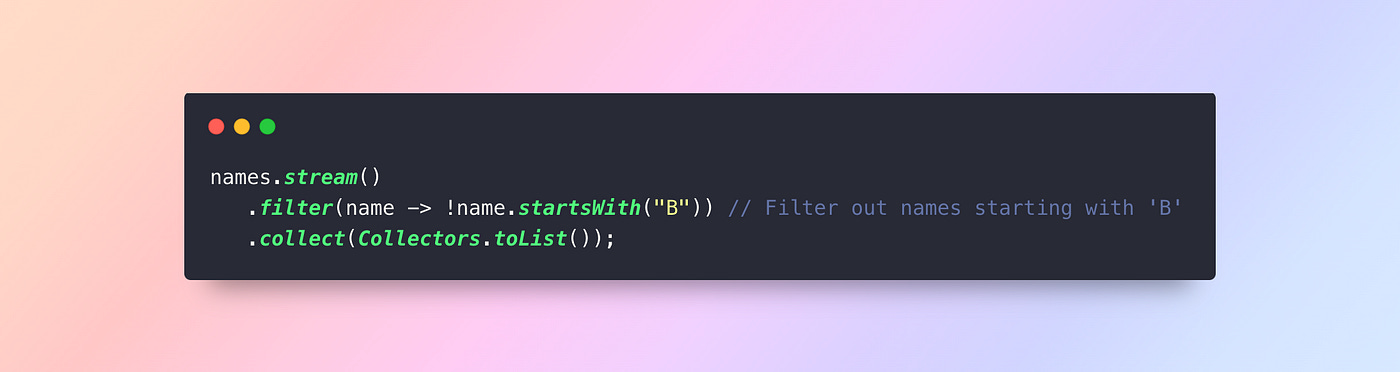
Working with Java Streams, these are some common mistakes:
Not Using Terminal Operations:
Mistake: Forgetting to call a terminal operation likecollect(),forEach(), orreduce(), this leads to no execution.
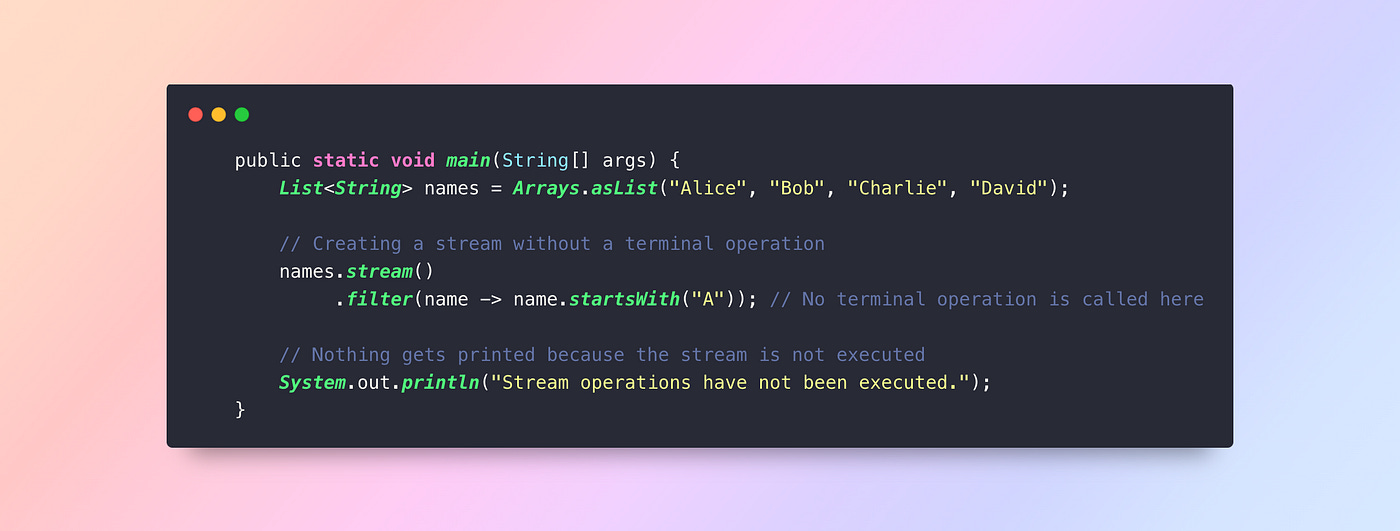
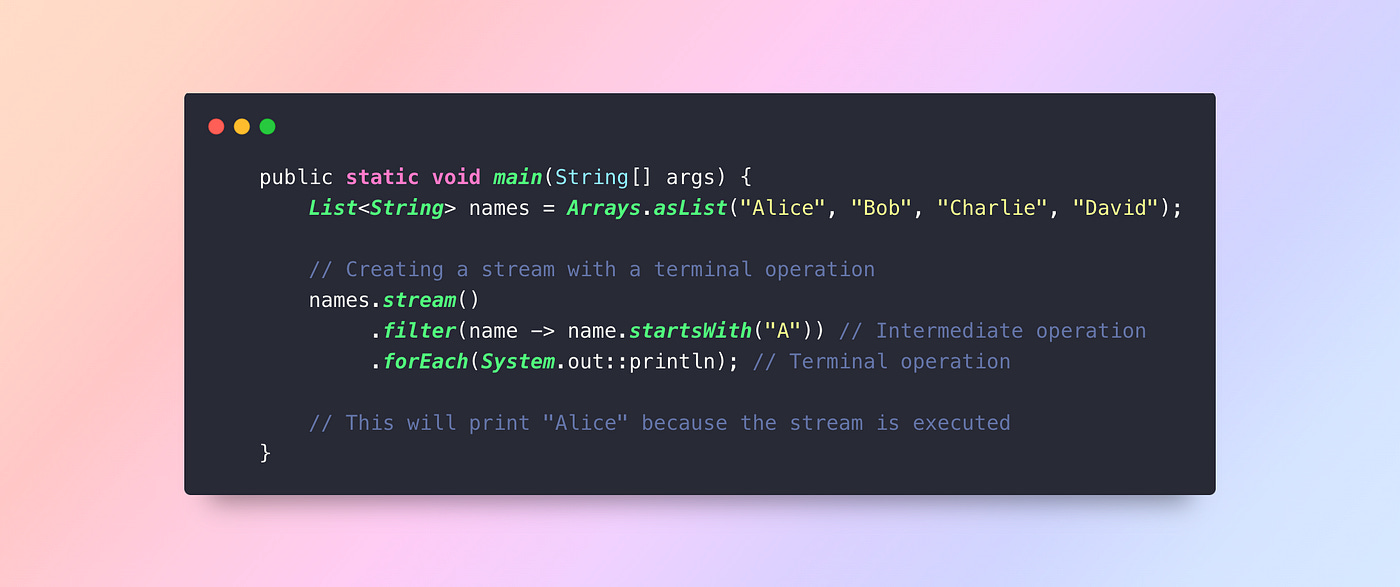
Solution: Always end with a terminal operation to trigger the stream processing.
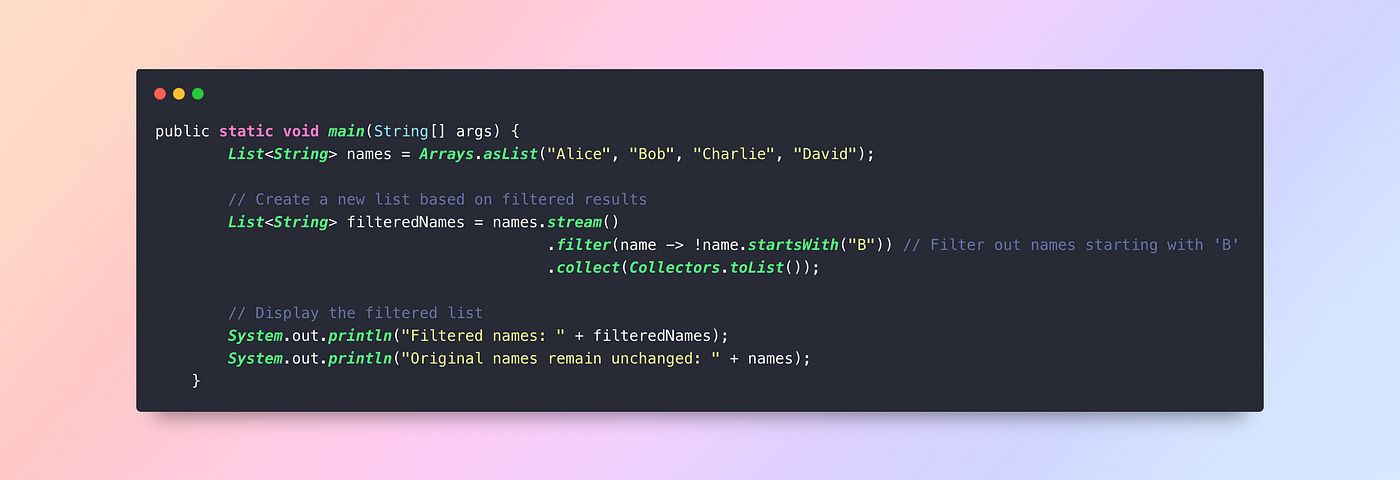
2. Modifying Source Data:
Mistake: Changing the data structure (like a List) while processing it in a stream can lead to unknown results.
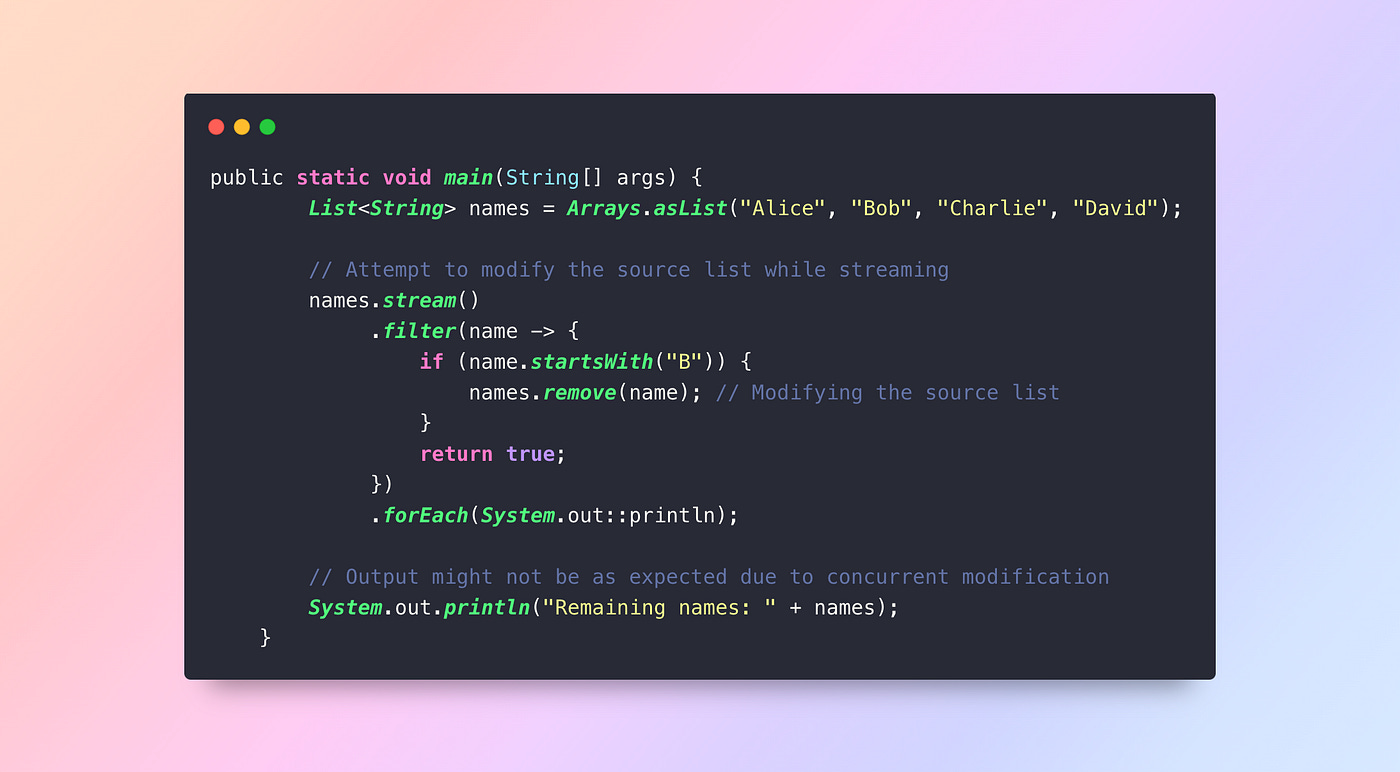
Solution: Don’t modify the source data during stream operations, instead use streams to create new collections.
3. Ignoring Parallel Stream Overhead:
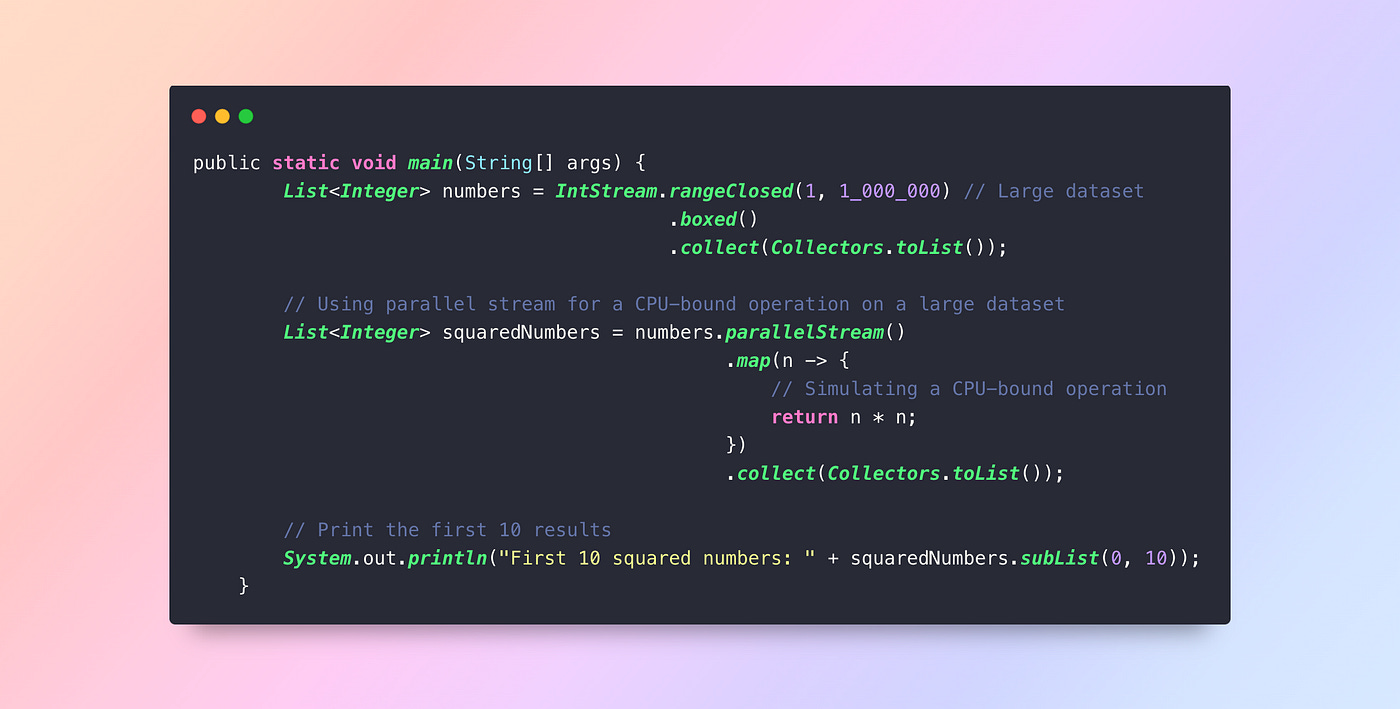
Mistake: Thinking parallel streams always lead to performance improvements without considering context, e.g small data sets or lightweight operations.
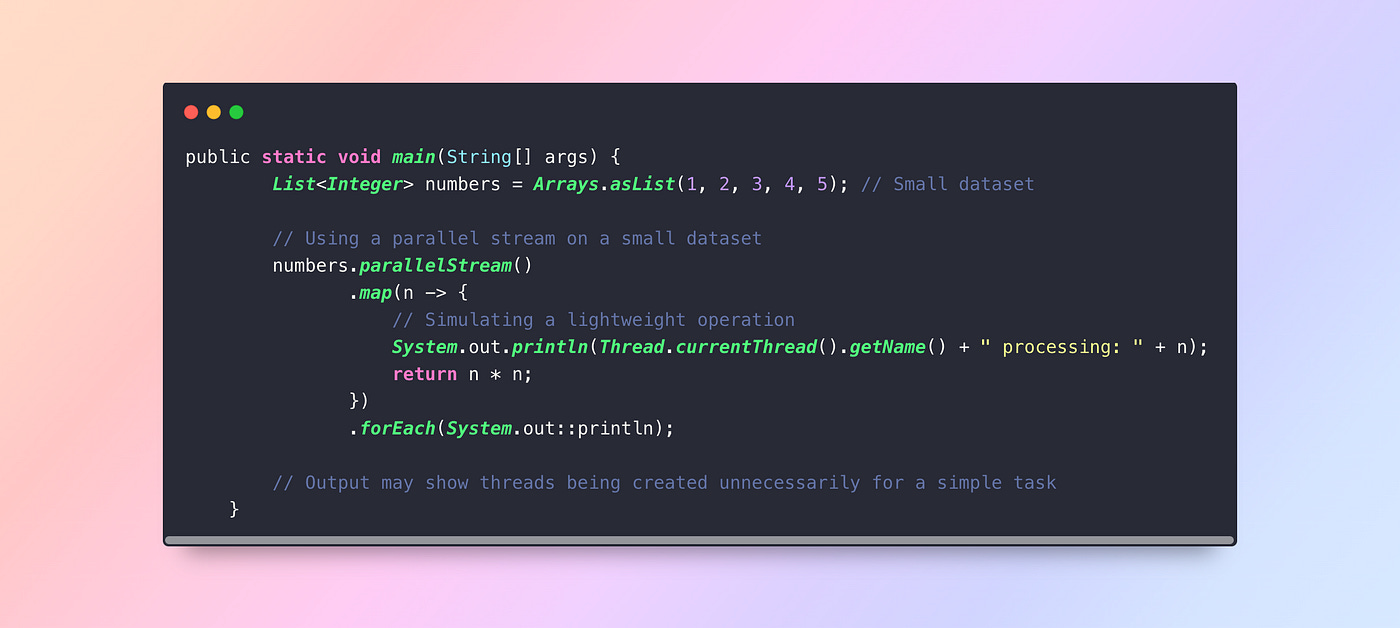
Solution: Be careful with parallel streams, especially for CPU-bound tasks with a large data set.
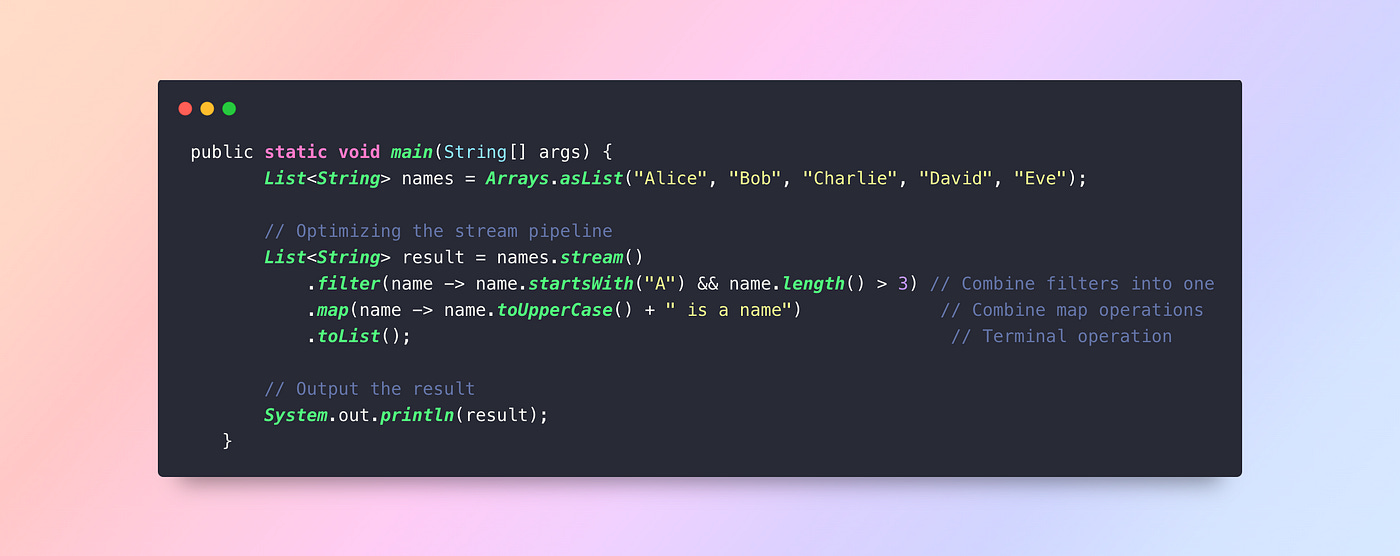
4. Overusing Intermediate Operations:
Mistake: Chaining too many intermediate operations (like filter() and map()) can introduce performance overhead.
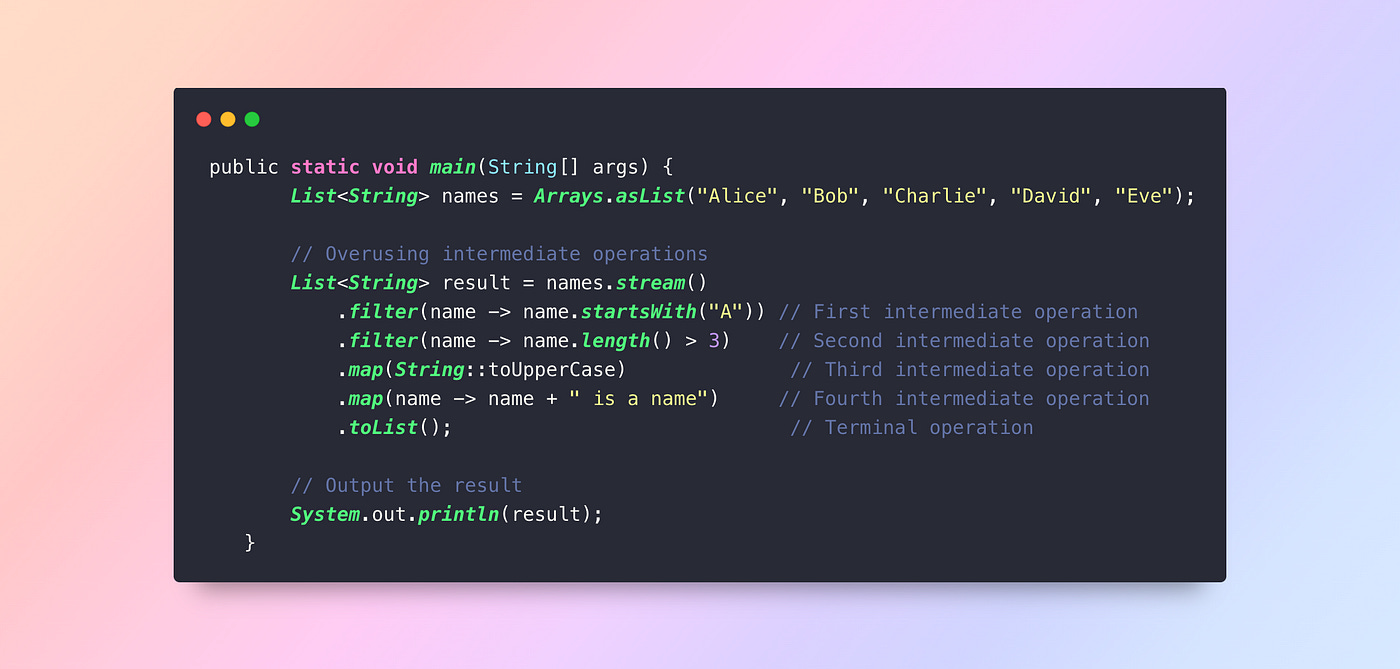
Solution: Minimize intermediate operations in your stream pipelines and use stream fusion when possible.
5. Not Handling Optional Values:
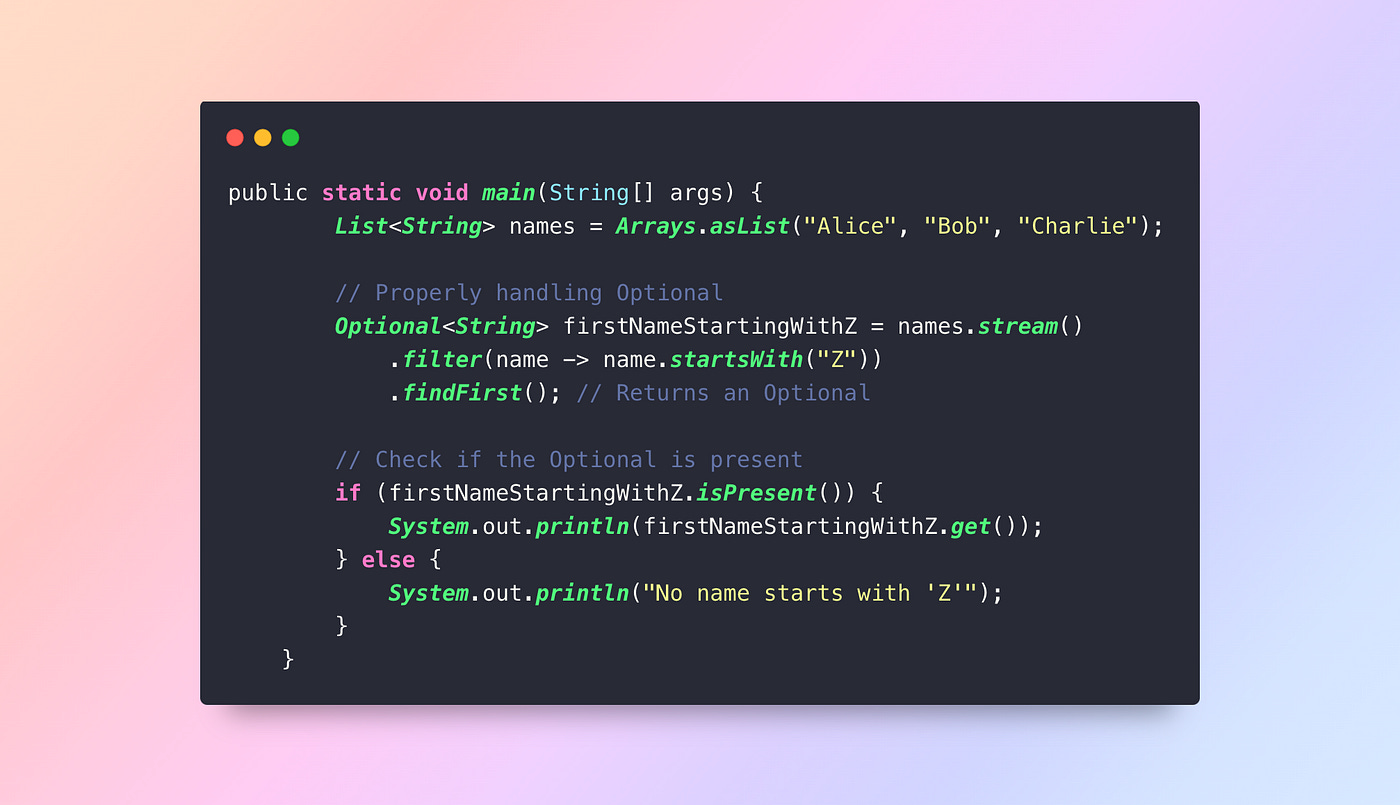
Mistake: Not handling Optional results properly when using operations like findFirst() or reduce().
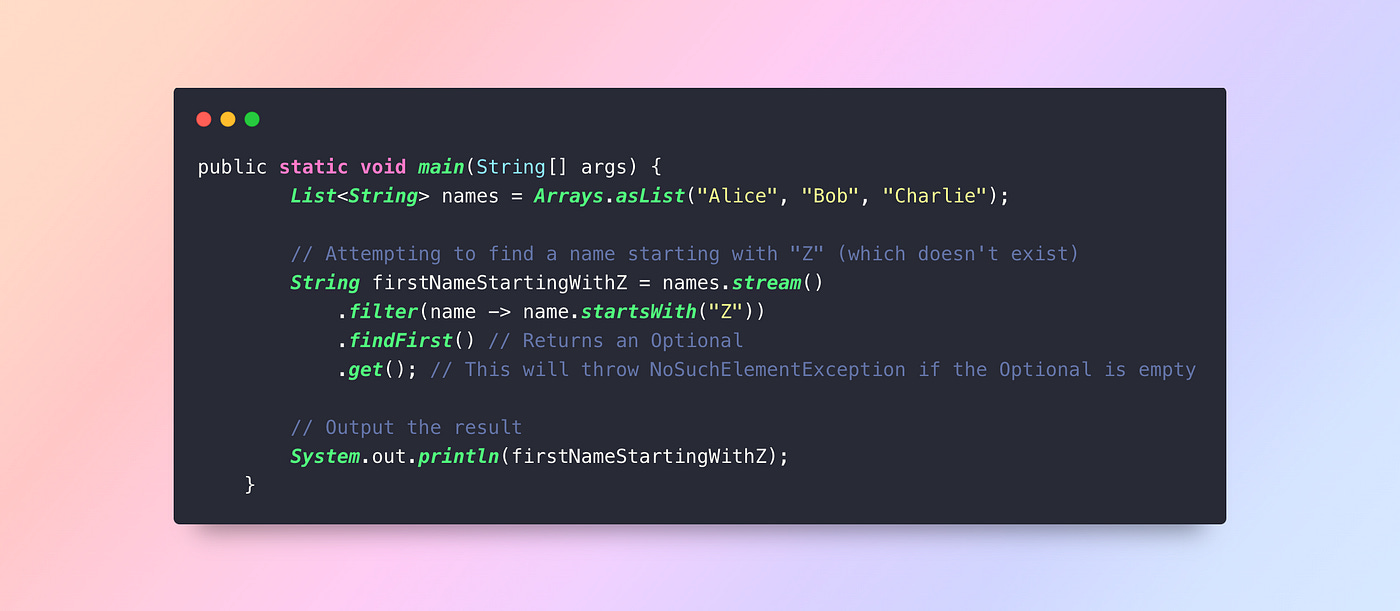
Solution: Always check if an Optional is present before accessing its value to avoid NoSuchElementException.
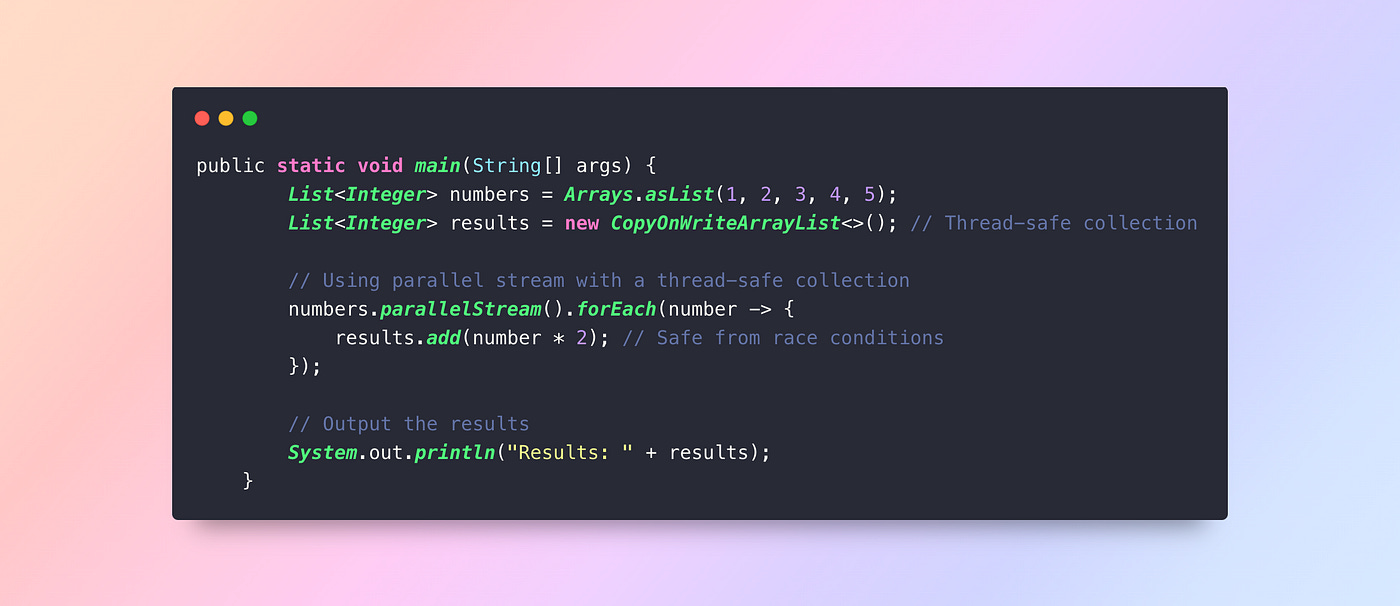
6. Neglecting Thread Safety:
Mistake: Using shared mutable state in parallel streams can lead to race conditions and inconsistent results.
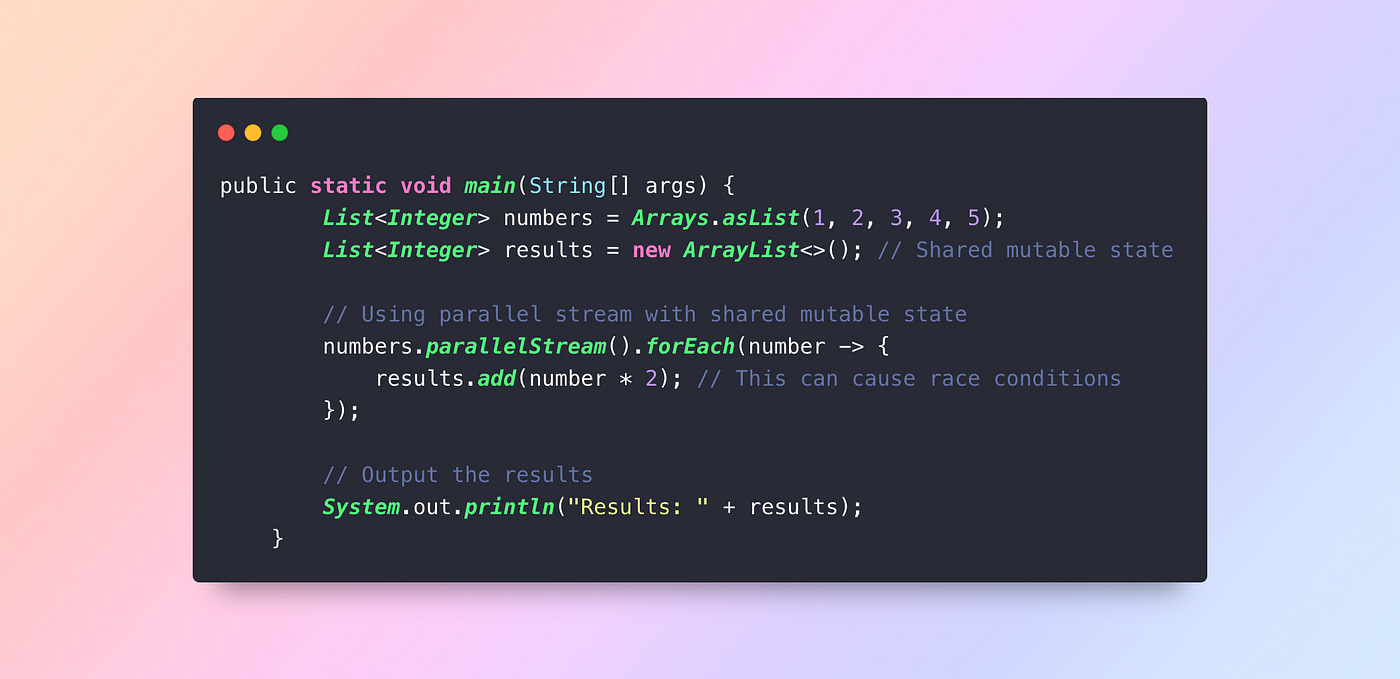
Solution: Avoid shared mutable state; use thread-safe collections or local variables instead.
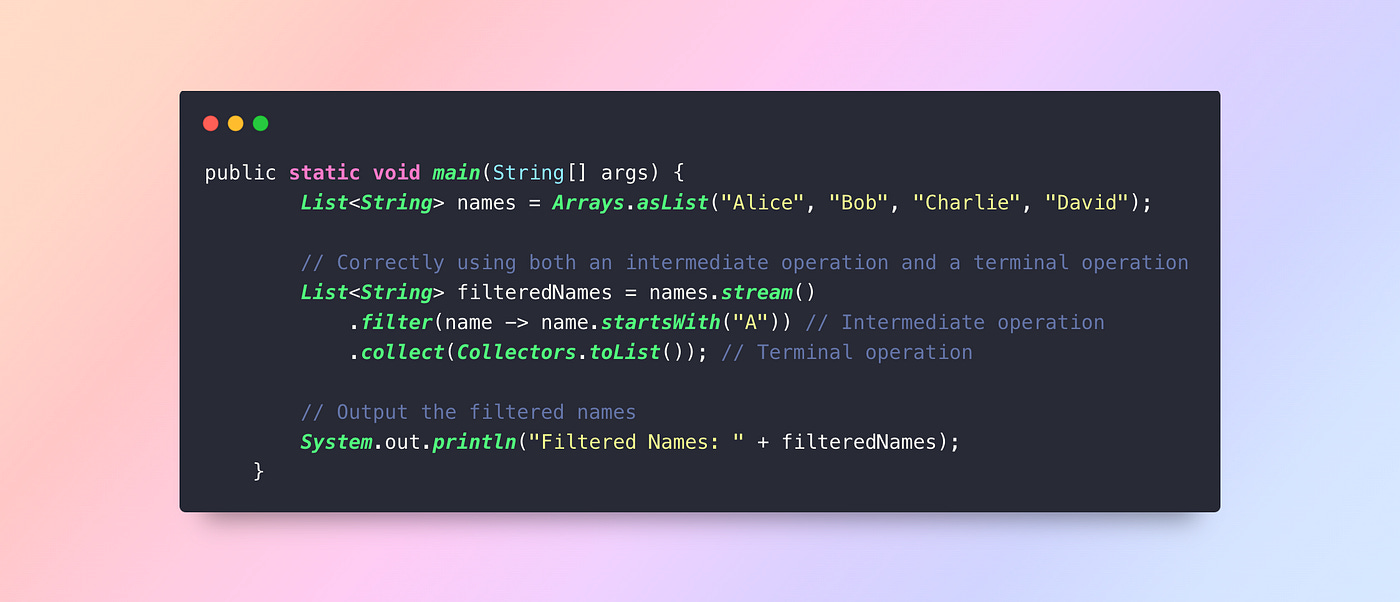
7. Confusing Intermediate and Terminal Operations:
Mistake: Knowing the difference between intermediate (which return a new stream) and terminal operations (which produce a result).
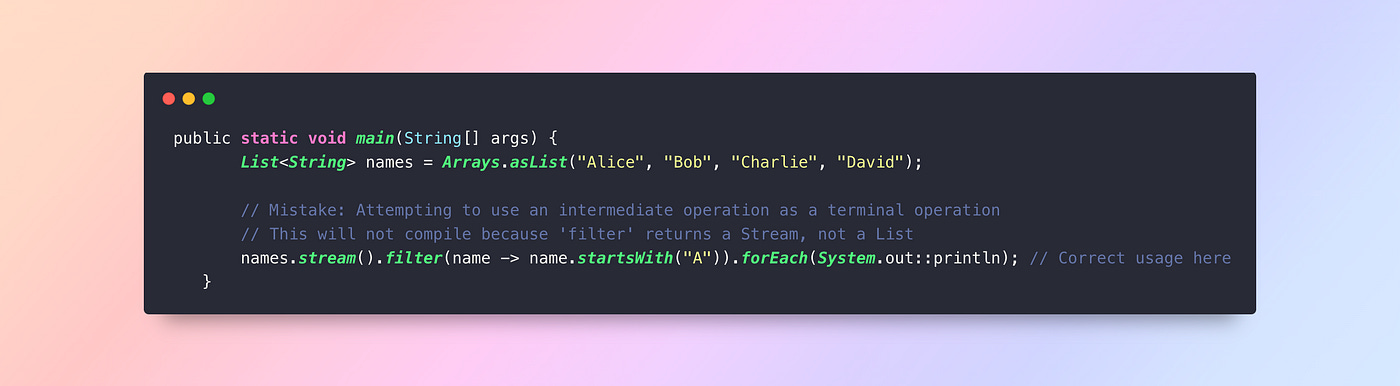
Solution: Familiarize yourself with the characteristics of each operation type to avoid logical errors in your code.
Conclusion
By having these tips and implementing these solutions, you can work better with Java Streams and write cleaner, more efficient code.